Published August 14, 20262 min
What it looks like in practice
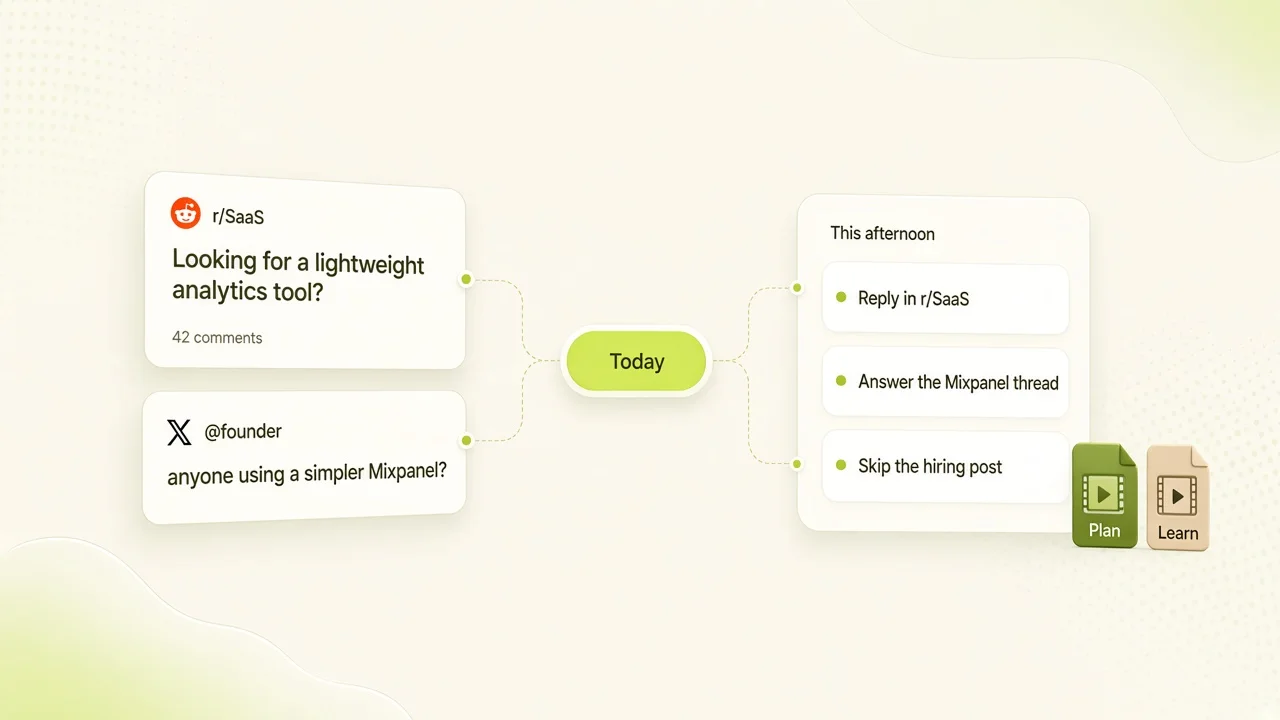
You define rules once: who your buyer is, which pain phrases matter, which subreddits and X searches to watch, and what to skip. Every morning OpenNomos delivers a short list — each with source, match reason, and a next step. You keep two or three for this afternoon, write the replies yourself, and mark the rest keep or drop so tomorrow is sharper.
Rules you write once
Audience, pain phrases, channels, competitors to watch, and red lines — stored on the project, not in your head.
A morning list, then today's plan
A few high-intent posts with a next step. You keep two for this afternoon. You still write the reply.
You still write the reply
Agents find and explain. You decide whether to reply, and you write the words — no auto-DM, no templates sent for you.
What the opportunity list looks like
Same Studio UI your team opens each morning — sample rows for a freelance project-management SaaS.
r/freelance
Any simple alternative to Asana for freelancers juggling 5–8 clients?
Reply with a useful client-workflow tip first; disclose you build the tool; offer to answer follow-ups.
@indie_ops
wish there was an app that just tracked client projects without the enterprise junk
Short, specific reply within the hour; one-line disclosure if you mention the product.
r/smallbusiness
How do you all handle client deadlines when Notion boards get messy?
Answer helpfully now; note the recurring ask for a future playbook post.
The rules a SaaS team typically sets
A project-management SaaS for freelancers might configure something like:
- Target user: solo freelancers and 2–5 person studios drowning in client work.
- Pain phrases: "looking for a tool", "alternative to Notion/Asana", "how do you track client projects".
- Channels: Reddit (r/freelance, r/smallbusiness, niche subs) and X search for those phrases.
- Skip: job posts, agency recruiting threads, pure venting with no ask.
What one morning looks like
Open the opportunity list
Three to five items. Each shows platform, title or snippet, opportunity type (usually Potential User), and why it matched your rules.
Read the match reason
Example: "User asks for a lightweight client-project tracker after complaining Asana is overkill — matches audience + pain phrase + competitor mention."
Check suggested action
Usually: reply with a useful answer first, disclose you build X, offer to answer follow-ups. Sometimes: turn a repeated question into a short guide later.
Keep two for this afternoon
Reply to the two that are fresh and specific. Mark the rest keep or drop. That call is what makes tomorrow's list sharper.
A concrete opportunity card
Title: "Any simple alternative to Asana for freelancers?"
Type: Potential User Opportunity · Source: Reddit · Posted 4 hours ago
Match reason: asks for a lightweight tool; freelancers as audience; competitor named; open to recommendations.
Suggested action: answer with a clear workflow tip that works without your product; then one-line disclosure if relevant.
Founder time: ~8 minutes from open to posted reply. That thread can keep sending Google traffic for months.
FAQ
How many opportunities per day should I expect?
Quality over volume. Early on you may see a handful; as rules sharpen, the list stays short on purpose — conversations worth having, not raw keyword hits.
Can a one-person team use this?
That's the main audience for this use case. Fifteen minutes over the morning list replaces an hour of tab-hopping across Reddit and X.